


G'day from W.A.
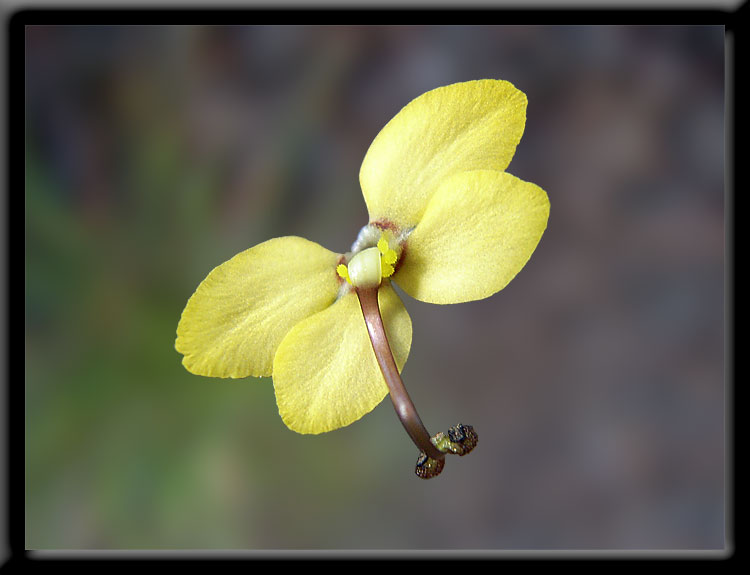
A triggerplant has a spring-loaded touch-sensitive column hidden under the petals which flicks over when an insect lands on the flower for a feed of nectar.
At the end of this column is the male and female parts of the flower. (anther and stigma)
This action either deposits or collects pollen depending on the cycle of the plant.
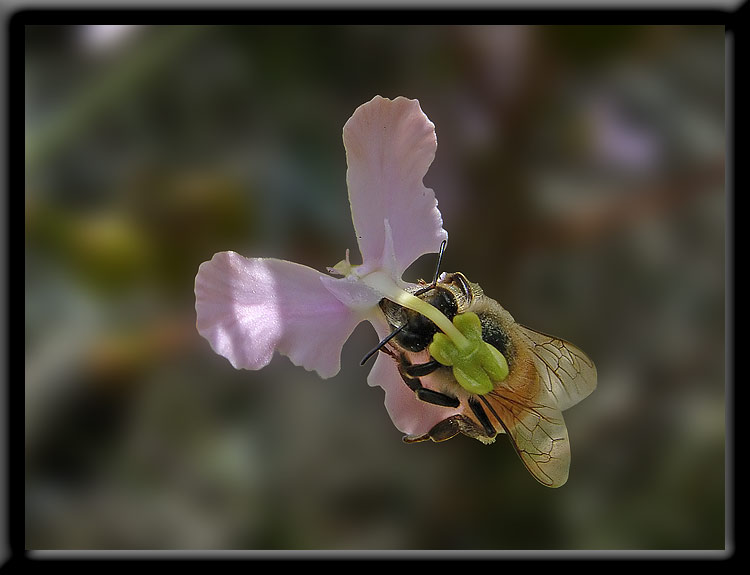 Pollinator
The pollen filled anthers (male) appears first on the young flower, then as it matures the sticky stigma (female) takes over and is ready to collect pollen. This cycle prevents self pollination.
Most of the bees I have seen visiting these flowers have a worn spot on their back where they have been repeatedly whacked by the column.
More bee pics 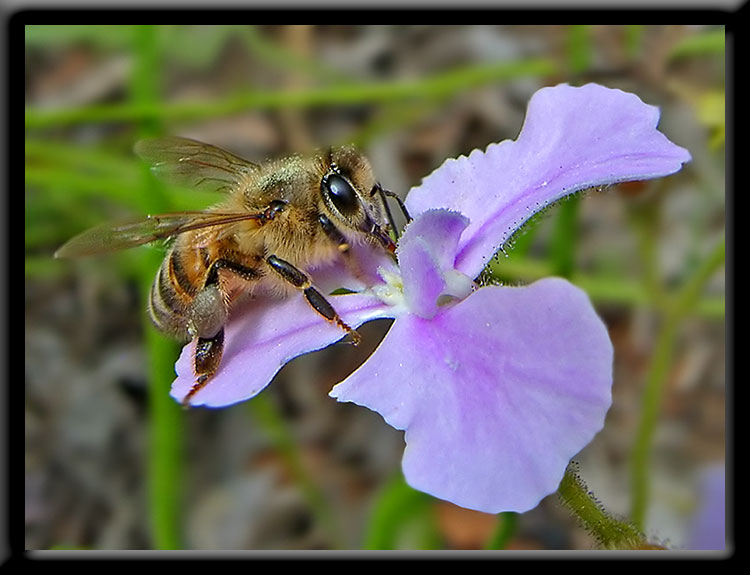
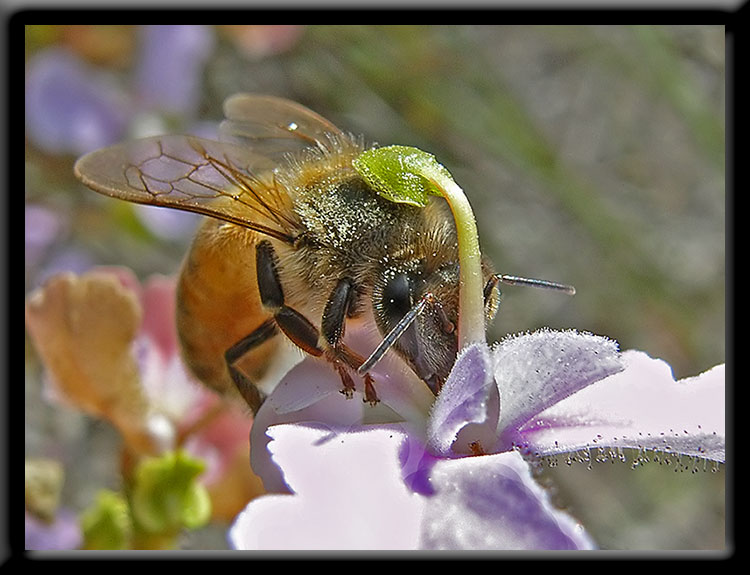
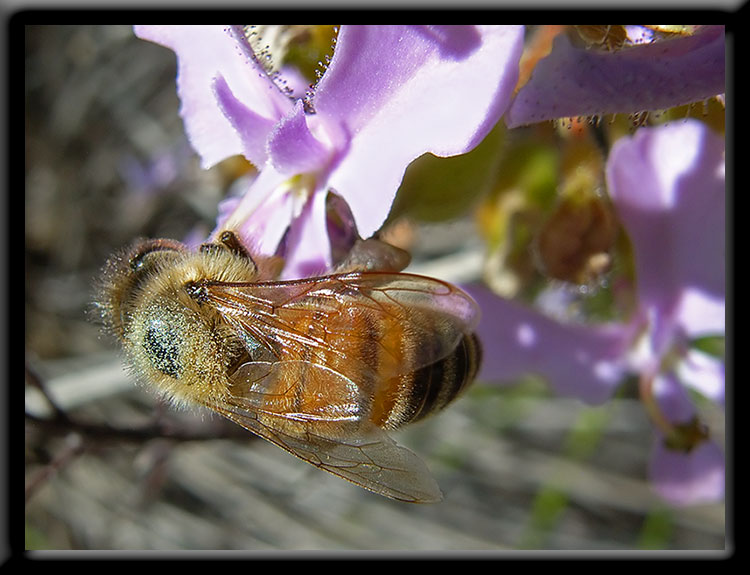
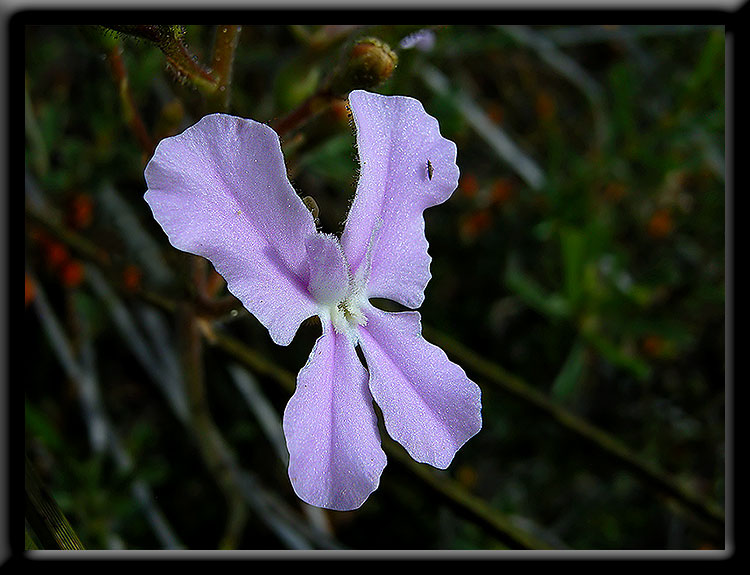 Stylidium affine
The small lobes in the centre of this beautiful Queen Triggerplant prevents access to the nectar unless the insect lands on the lower petals.
The clever design of the flower forces the insect to land on the same position each time.
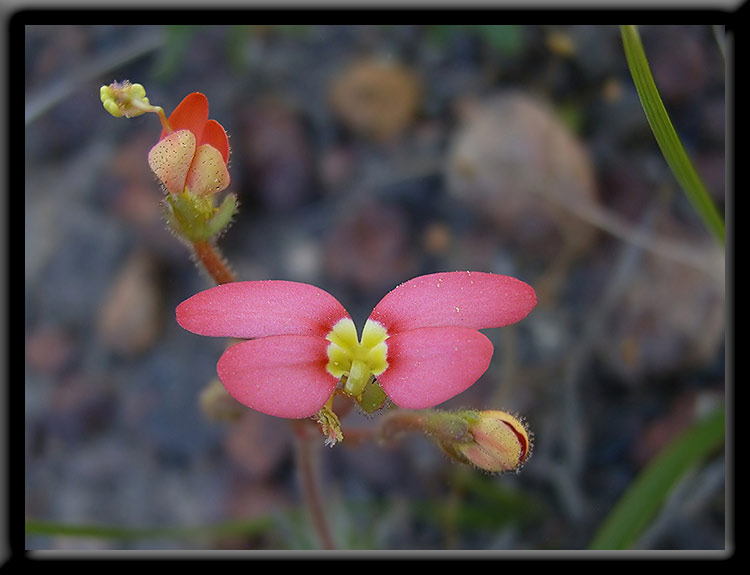 Stylidium bulbiferum
These plants are amazingly precise.
To avoid producing hybrids, different species of triggerplants have various shape and lengths of the column, which can strike from under, over or even from the side.
Therefore an insect visiting two species can be struck at different locations on the body.
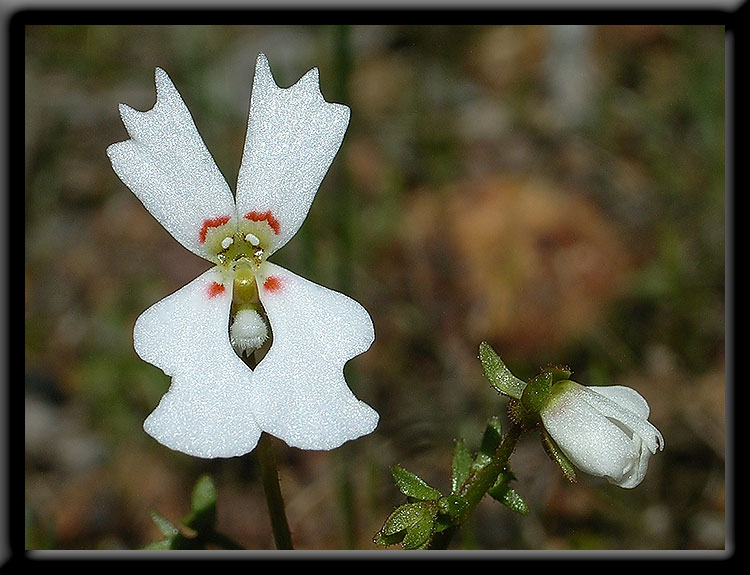 Stylidium calcaratum
These triggerplants strike the insect on the underside of the abdomen like "a punch in the guts".
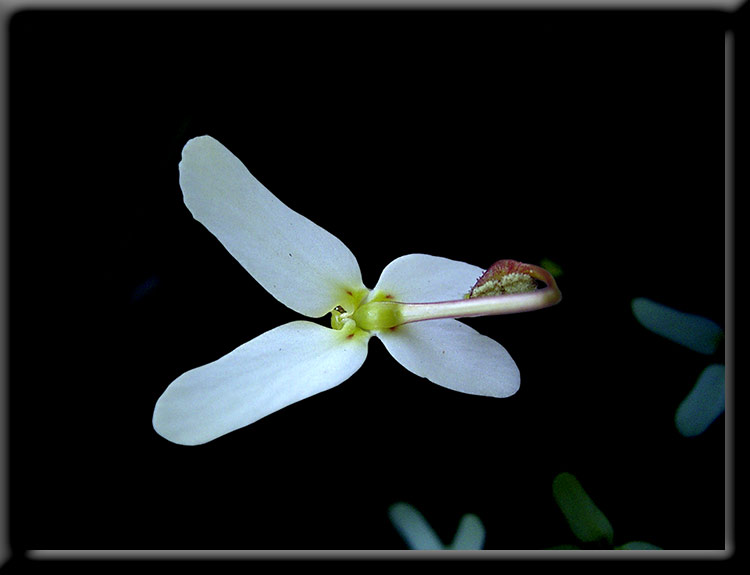
So named because the flower closes like a book at night or in cold weather.

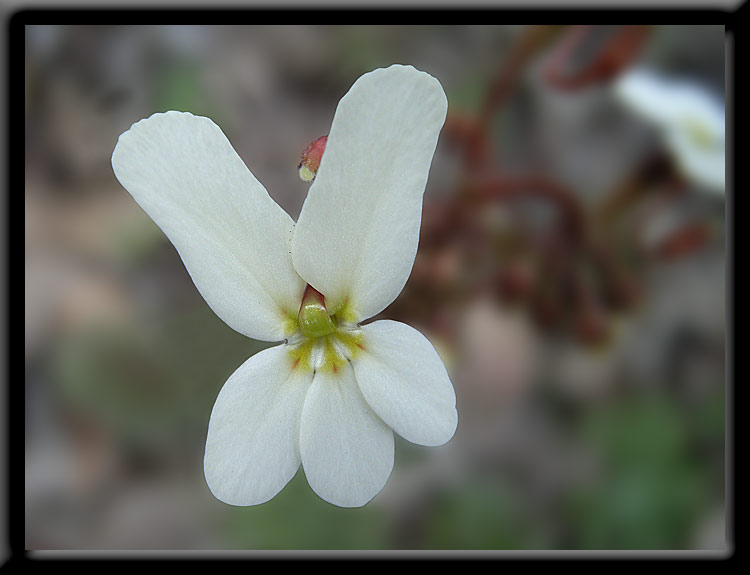
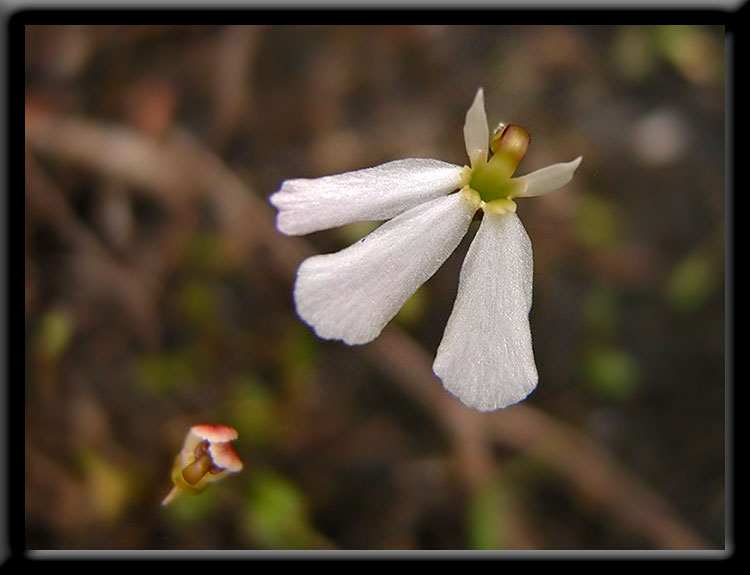
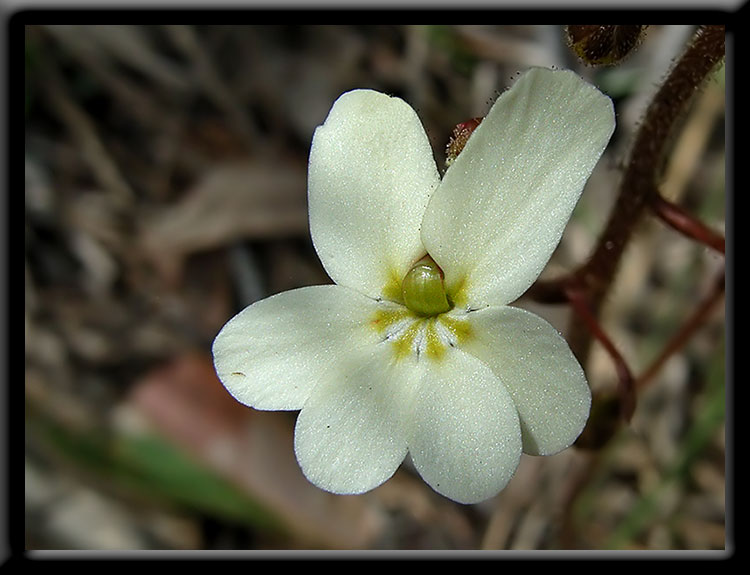
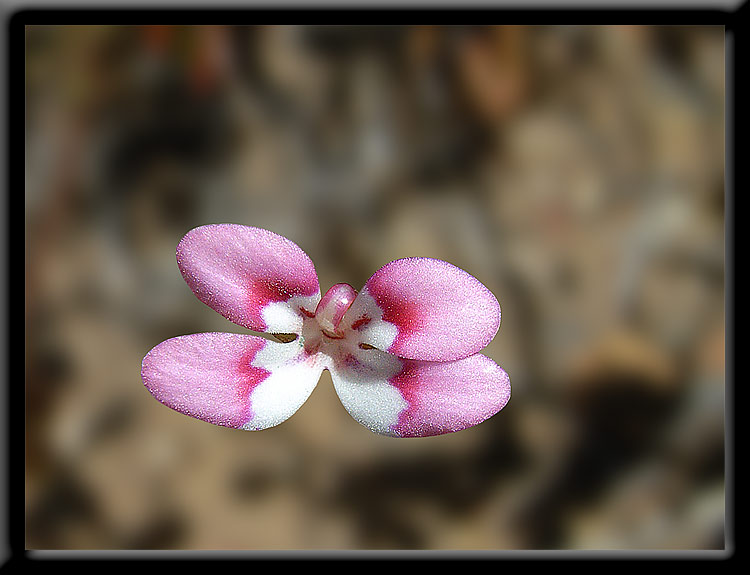
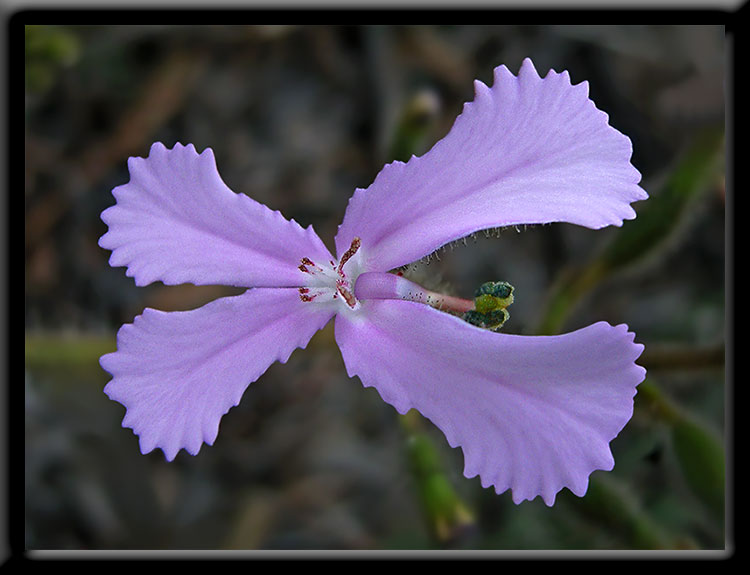
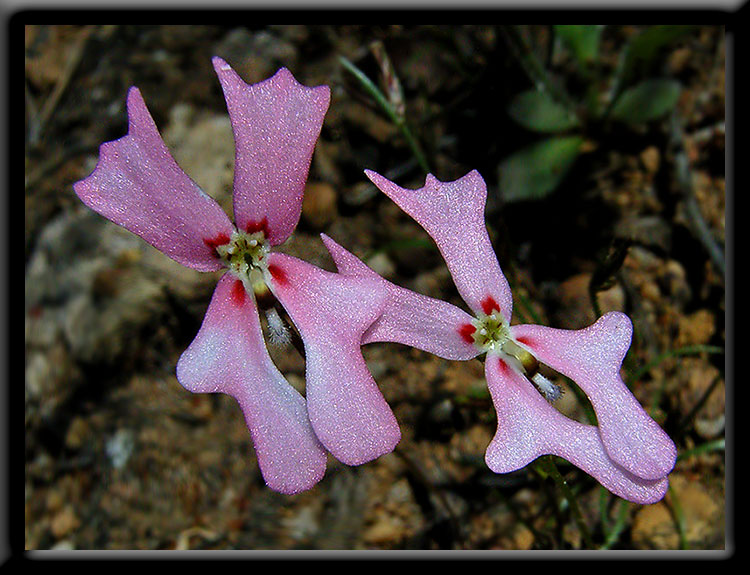
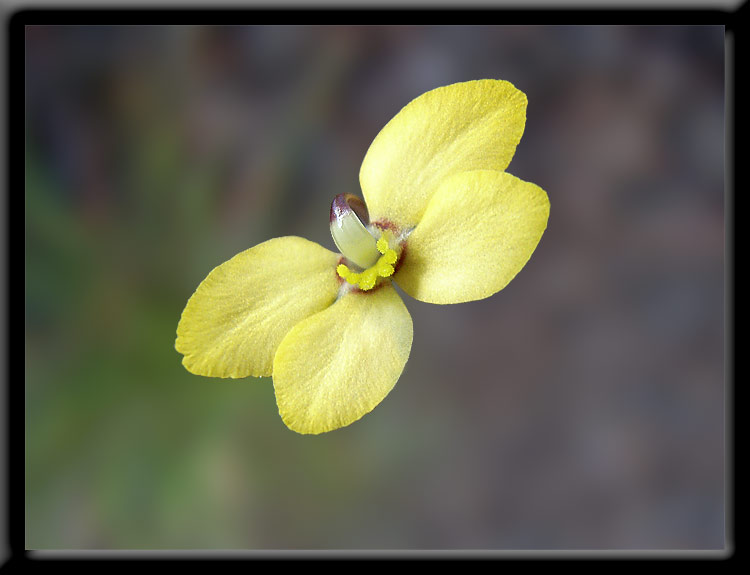
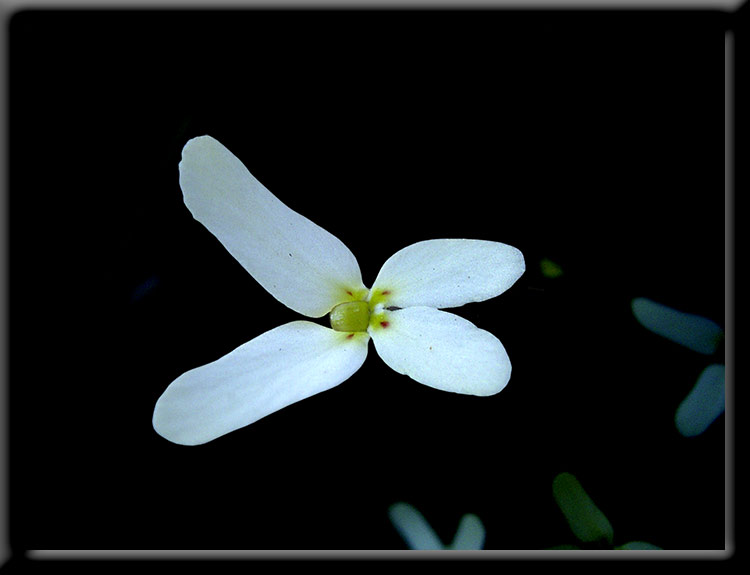
99% of triggerplants have two pairs of petals.
Here you can see 2, 3, 5 and 6 petalled varieties but they are very rare.
3
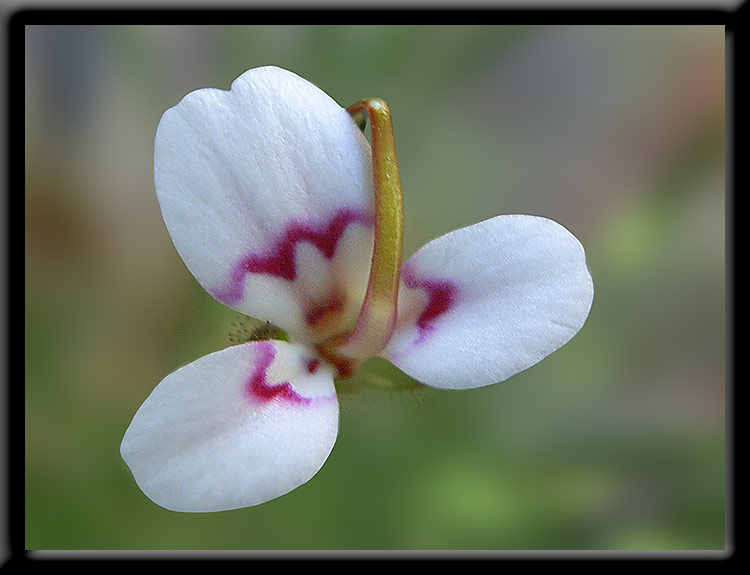 5
5
 5
5
 6
6
 Stylidium dichotomum
After the column has been triggered it gradually resets, usually within an hour, ready to assault another innocent insect looking for nectar or pollen.
About 70% of the world's 250+ known species of stylidium occur only in the South-West of Western Australia, highlighting this area as the major center of triggerplant evolution.
Stylidium is the fifth largest genus in Australia.
Click on this image to see the trigger action in more detail.
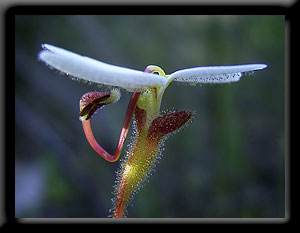 Stylidium hispidum
Stylidium are believed to be carnivorous (or protocarnivorous).
It has been reported that the numerous sticky glands on the flowering parts of triggerplants secrete enzymes to trap and digest tiny insects.
If this proves to be true, the addition of this genus would almost double the number of known carnivorous plants.
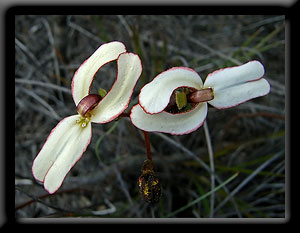 Stylidium schoenoides
The largest of all triggerplants and named for the powerful 'kick' when triggered.
These are only 5cm (2in) tip to tip, so most stylidium flowers are very small.
Small children are advised not to touch these flowers.
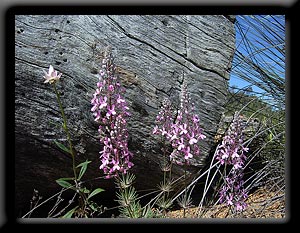 Stylidium brunonianum
Class: Gymnospermae
Subclass: Dicotyledonae
Superorder: Asteridae
Order: Campanulales
Family: Stylidiaceae
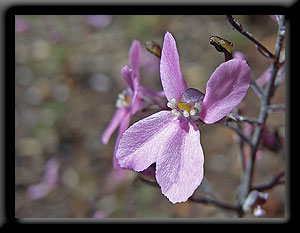 Stylidium brunonianum
The innocence of the flower belies the mamba-shaped head of the column, ready to strike and just as fast.
Click on the image to see this in detail.
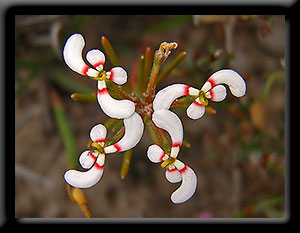 Stylidium breviscapum
Boomerang Triggerplant - Stylidium breviscapum
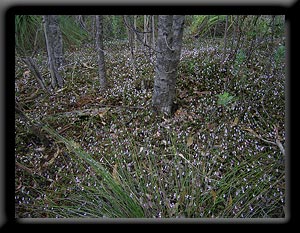 of Triggerplants
For more detailed information check out the Wikipedia Triggerplant page.
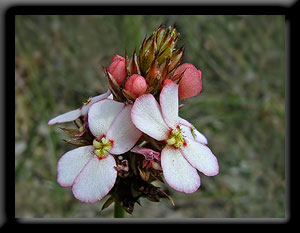 Stylidium junceum
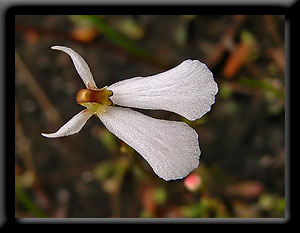


More stylidium images

All pics taken by  Ray
and copyrighted 2003 - 2022.
Ray
and copyrighted 2003 - 2022.
Comments - newest first
Baburao Gollamudi
Reply
Very nice site for WA Wildflowers, well compiled and very useful for wildflower lovers.
Marinus de Jager
Reply
Be Bop is is such a fantastic image!
I am currently writing a review paper with other biologists on the pollination process, and this image is one of the best we've seen illustrating precise pollen placement and pick up from insects.
Would it be acceptable if we use this image in the manuscript? We will give you full credit, and it would really help to convey the precision that some plants have in pollen placement.
Love your work.
Thanks in advance!
Kind regards
Marinus de Jager
Carol
Reply
I love this site and the screen saver is just gorgeous.
Adrienne
Reply
Very good informative site and really easy to use. May I suggest that a picture of the habitat these wildflowers live and area locations would be useful.
Pauline
Reply
Great site, can you recommend any plant nurseries in Perth that sell some of these varieties please?
Ray
Reply
Try Zanthorrea Nursery in Maida Vale.
Rosi
Reply
Having just returned from WA with a zillion flower pics I have to say your page is just a treasure trove!! Thanks, Rosi
J.
Reply
Thanks for sharing, very informative...
Maiden
Reply
Very nice website. I grow stylidium petiolare at home, and they are amazing plants !
About carnivority, the plant develop dew, insects stay stucked on the dew, a visible digestive enzyme pool(protease) apear like pinguicula, and 4-5 days after, you can see a little exo-skeletton remain on the plant. The flowers stalks are also very tall, like most all others carnivorous plants.
My stylidium grow faster when the flowers are open, because the plant have some nutrients boost.
So, its clearly carnivore.
Tammy
Reply
Reading your comment I believe that you are talking about 2 different plant species. Plants from the Drosera family are carnivorous that secrete a dew the insect gets trapped/stuck, it then digests the insect to get its nutrients. Stylidium are referred to as proto-carnivorous. They dont trap an insect and digest it. The plants have a trigger when the insect lands on the flower its like a pressure pad the trigger launches and disperses pollen onto the insect but does not harm it any way at all. But they are both great plant species
Amber
Reply
Thank you so much for this info, really amazing what plants can do :) amazing photos too.
Mansi (India)
Reply
This is a great site to learn and explore... Great job!!!
bahut accha kaam kiya meri bahut madad ho gayi shukriya
Ahana
Reply
I had to make a project on insectivorous plants with some good pics...this page helped me a lot!! Not only did i got good pics and info. but also understood how the plant works through animation...Thank u!!
Divya
Reply
Great job by the one who made this page...The innocent plant is more than just innocent, though beautiful, it has a clever way of capturing insects... The content, pictures, everything is just awesome
Dave Smith
Reply
Cool Site
Roberto Espen (Italy)
Reply
Piante fantastiche: la Natura ci stupisce sempre con forme particolarmente affascinanti e meravigliose. Quando poi le piante si "muovono" è strabiliante. Complimenti per le foto.
Keith
Reply
Nice work mate!
patrick
Reply
how would i maintain these in a small home garden?
badgirl
Reply
Great site! I love the layout and the pictures as well as the content.
Richard
Reply
I suggest you check the actual stickiness of the glandular hairs in the stems and leaves of Stylidium before assigning carnivorous properties to them. I have yet to find any in the southern half of the continent though it is possible that those in the north have sticky hairs. And if you find any, how will you prove that the plant is digesting the insects rather than that the insects are being decomposed by bacteria?
Dicko
Reply
Doug Darnowski has proved -
1) prey are trapped in the wild in numbers comparable to those found for accepted carnivorous plants such as Drosera (on a per unit surface area basis)
2) prey are digested by proteases secreted by the plants and not by surface microorganisms
3) material is absorbed by the surface of triggerplants.
Jean
Reply
I love this page and often send others here to see how trigger plants work. You have created a great series here.
Harry
Reply
I had no idea that these even existed and I love the weird and unusual. Thanks for a great site!
sam
Reply
Hi there..nice website :)
Cristiano Marques
Reply
Wonderful plants, I have a S. graminifolium and S. amoenum, now I'm waiting for flowers.
sarah
Reply
A very good site. I am having to study some of the reproduction strategies of WA flora and your pictures provided me with a good close up look at the flowers of these amazing species! Thanks... and awesome photography!
Maggie
Reply
These are amazing! You have such wonderful pictures of these remarkable plants. I hope one day to travel to Australia to see these - moving flowers.
Greg Bourke
Reply
Hi Ray, I assume it's Ray. Mate I just wanted to say the pics are fantastic. The website layout is awesome and the Stylidium shots are perfect!
I am collector of Carnivorous plants and Stylidiums and make the journey to WA as often as I can. I photograph everything I see especially the very small! I edit for a journal (Carniflora Australis) on Carnivorous plants and also for the International Triggerplant Society. I am also attempting to write books on WA's weird and wonderful plants although I'll probably die before I complete them.
Anyway, I wish I lived in WA
Regards
Greg
orca-wild
Reply
The natural world still beats human achievement in my books.
apodda
Reply
Fascinating plants!
RobDawson
Reply
Every time I see something amazing like this for the first time, I'm reminded that however much you know there is always something new and exciting just around the corner.
Caerdrioia
Reply
I had never seen these beautiful plants before. Nature is endlessly amazing!
Jarve
Reply
It boggles the mind to think how these plants evolved. Excellent presentation.
Muggins
Reply
It is incredible that a plant can do this. I especially like the picture of the bee being hit on the back - wonderful!
meg
Reply
Hi this is a really good site, I'm from WA, but there's things on here that I've never seen!
Jill
Reply
In the bush at the end of our street we have these beautiful little plants grow along the either side of the fire break in profusion. The type I see look like the 'book' except they are pale pink. I have a nice photograph of them. They are intriguing indeed and the trigger does snap over fast and can hold onto a piece of grass quite easily. I just bought a stylidium palgarup for my garden and was looking for more information on this particular plant, but I have found it very hard to come by.
Leisl
Reply
This stunning pictures made my day thankyou for the wonderful experience WELL DONE !!!!!!!
Ryan
Reply
I absolutely love your photography of the triggerplants. Great material! I've never seen these plants in such detail before. Inclusion of wider-angle shots showing their habitat is also very nice to see, especially for those of us that admire these plants far from their native range. Again, wonderful job on these photos here. I'm certainly jealous of your talents.
Cassie
Reply
Those images are stunning, very beautiful photography. I came here looking for information on their supposed carnivorous nature, I was reading that they have stalked mucous glands on them that secrete digestive enzymes, but research has not been done to see if they actually absorb nutrients.
Australia is full of so many interesting plants, I love this country.
Anyway, if I go on a holiday to WA, I will definitely keep an eye out for these interesting plants. Since I'm not, I am going to search for them in my local nurseries. Keep up the good photography.
A. Roguenant & A. Raynal
Reply
Splendid pictures, and so interesting from a biological point of view !
We enjoyed meeting these plants in the wild, in Australia.
Congratulations.
from France
Bev Campbell
Reply
Wow what a wonderful plant. Thank you for sharing these photos with us, it is a marvelous plant species.
If they are available commercially, the would sell fast
thank you again for allowing us to view your photos